
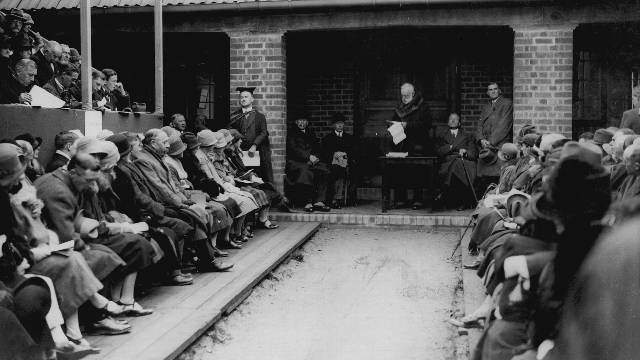
 The National Institute of Poultry Husbandry at 100 - rediscovering an eye witness account
To mark the Centenary of the opening of National Institute of Poultry Husbandry at Harper Adams, we’re sharing a contemporary acc …
Posted 3 November
Moving to online learning
12 May 2020
Written by Professor of Learning and Teaching Lydia Arnold
In the current pandemic situation, students at all levels of education have seen much of their learning move online. Technology has allowed classes to continue, albeit in a different form. Some subject areas lend themselves more easily than others to a transfer, but our own academic and professional services staff have been working incredibly hard to find effective ways of making the digital shift in all of our course areas. We have seen a wide range of activities put in place to allow learning to continue, including pre-recorded lectures, virtual group work, and interactive tasks. We have also seen different tools used so that groups can come together to discuss their learning and stay in touch.
In our own move to online learning and teaching, we recognise that it is very important to still ensure ‘good’ practice, and so the University’s eLearning team, along with IT colleagues, is providing guidance to support the digital transition. We have identified different considerations that go in to creating a positive online learning experience. This design guidance has already been widely read by thousands of colleagues around the world, as institutions come together to share expertise, for the benefit of all students at this time of difficulty.
Much of the advice shared by the eLearning team comes out of what is already practiced at Harper Adams, for example there is a recommendation to continue to focus on giving student feedback, so that students can see how they are doing and what they may need to change in order to progress and improve. There is also a recommendation that ‘relationships’ and not just ‘content’ should still be at the heart of teaching. This is something that we regularly see on campus with tutors taking great interest in both student wellbeing and academic progress. Now this is happening online too, through a whole manner of tools and technologies, including video calls and regular keep-in-touch messaging. Another of the recommendations is to ensure resources are as accessible as they can be. We know that many of our staff and students are distributed across areas where broadband is sometimes limited, and we also know they may be engaged in supporting family businesses and community challenges associated with the pandemic. By having resources that can be accessed at any time, online learning can be undertaken flexibly.
As we continue to adjust and adapt to the new normal, it is reassuring to know that our ways of learning and teaching can be translated to support our physically, but definitely not socially, distanced university community.
Read the full list of recommendations on online learning design here: https://lydiaarnold.wordpress.com/2020/05/01/my-lessons-about-online-learning/
Related Posts
The National Institute of Poultry Husbandry at 100 - rediscovering an eye witness account
To mark the Centenary of the opening of National Institute of Poultry Husbandry at Harper Adams, we’re sharing a contemporary acc …
Posted 3 November
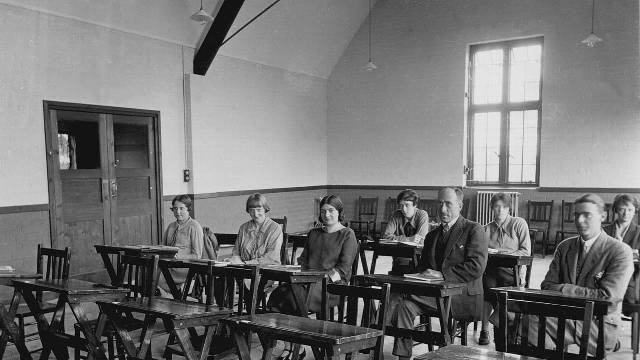 'More than 100 years of expertise' - a brief history of poultry at Harper Adams
Dr Stephen Mansbridge is Reader in Animal Science and Bioinformatics at Harper Adams University as well as Director of the Animal Science Re …
Posted 3 November
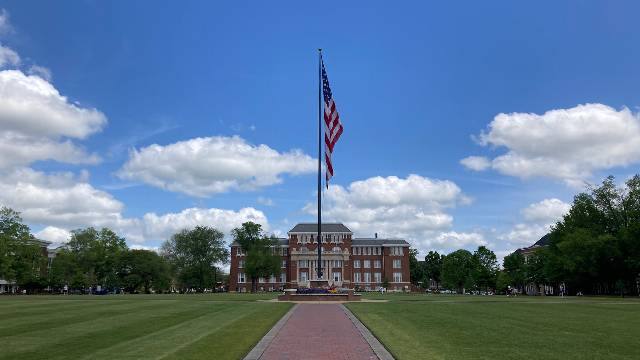 Agricultural Autonomy Institute joins Harper Adams University's 125th anniversary celebrations
A leading American expert in agricultural autonomy has paid tribute to Harper Adams University as it marks its 125th anniversary.Dr Alex Tho …
Posted 22 October
 Sky's the limit: Helen joins MP's fundraising parachute jump
A charity skydive by a Harper Adams University Business Development Consultant has helped raise more than £16,000 for a new cancer cen …
Posted 21 October